Tuesday, December 15, 2015

Secret of (to) Life

Secret of (to) Life

What is the secret of life? I believe that the better question here is what is the secret to life?

From a study following 268 male Harvard undergraduate students from the classes of 1938-1940 for seventy-five years on various aspects of their lives, Harvard psychiatrists found that strong relationships, connections, and coping skills are all that really matter in life. (Gregoire, Carolyn) Heraclitus believed that “wisdom is one thing; to understand the though which steers all things though all things.” (Kahn, Charles H.) I personally believe that it is a combination of both of these things along with the personality and make up of an individual.

Strong Relationships and Connections

“If you do not have strong relationships then it is almost impossible to live a fulling life.”  Feeling connections to your work, friends, and community that you live in is a large part of maintaining happiness. (Gregoire, Carolyn) When you sit back and think about this it really does make sense. People naturally have a need to interact with one another, whether it can be explained or not.

Personally, I feel that the need for personable, physical social interactions has been heightened since the invention of social media and more online dating and hook-up sites. Now when I say physical, I do not mean interacting with someone by doing a little bit more than a hug or a kiss. No, I mean being around people physically instead of secretly stalking your old high school crush on Facebook to see if you really were their type all along.

Though observation of my single roommates, they are constantly trolling social media sites that will allow them the opportunity to be around and meet new people. They are also much more worried about what they look like when they go outside as opposed to chilling in their pajamas all day around me. Maybe these are just two small stabs at me indicating that I am the boring roommate, which I am not going to admit but will not deny, but I would like to think that it is because they are in need of social interactions to feel wanted by a variety of individuals.

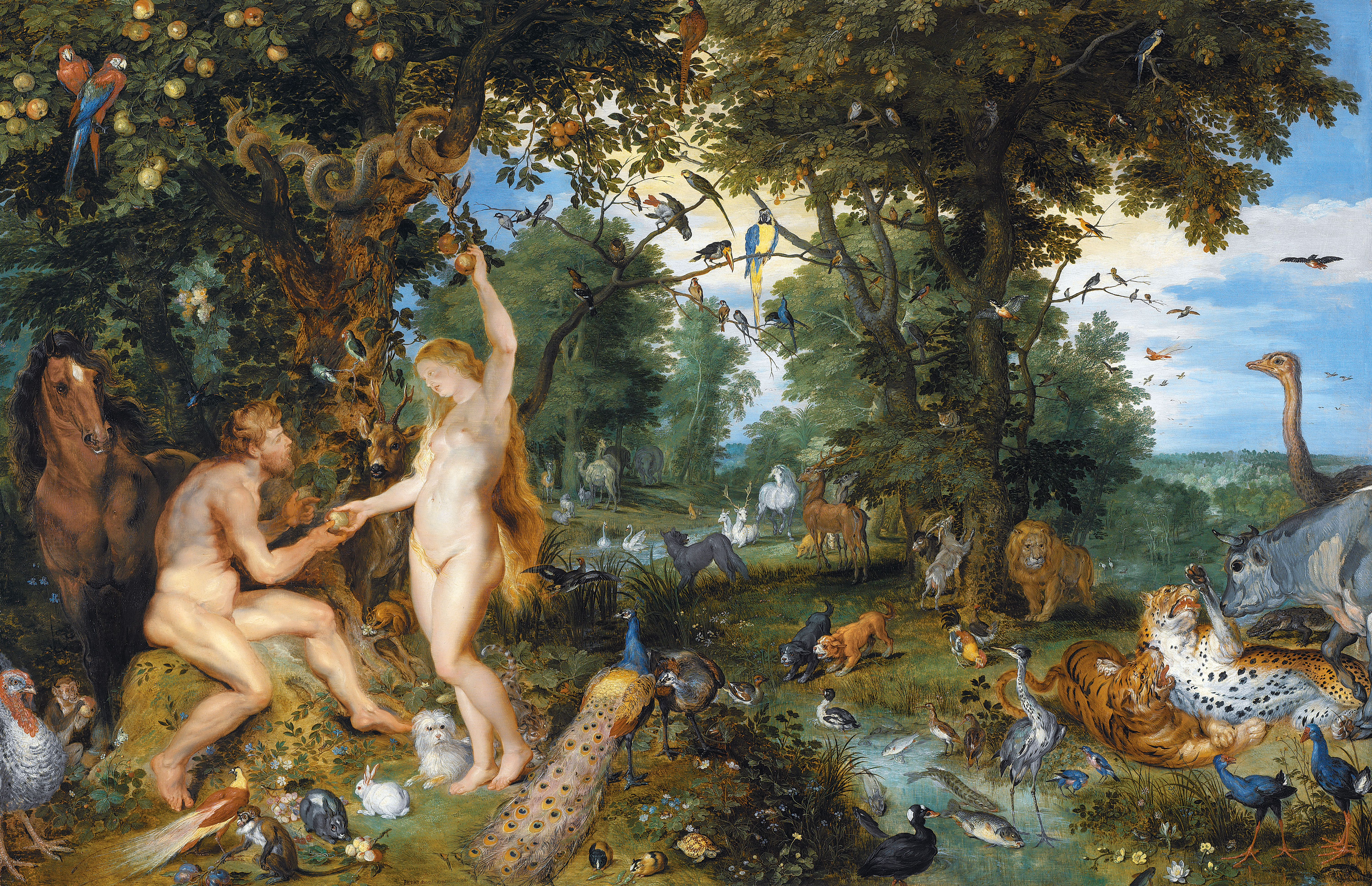
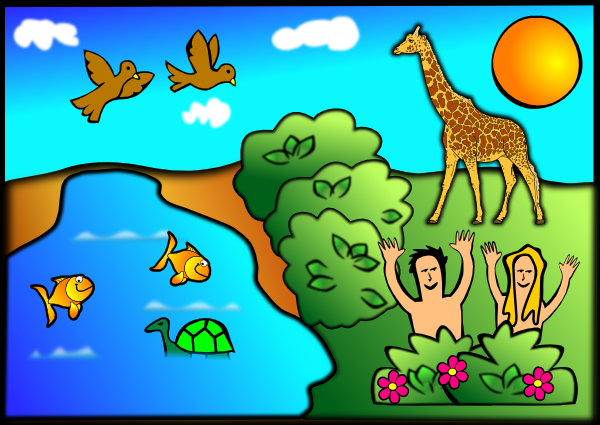
Since the beginning of time, there was always two or more people. Eve was created because Adam was lonely and then the first romance bloomed. (Holy Bible…) According to an article on Science Daily, depression is highest for those living alone. (BioMed Central Limited) This also makes quite a bit of sense. Unless their other personality is a stand-up comedian, not very many people are laughing and truly enjoying time when they are alone. Think about the last time that you were at home alone and were laughing at something that you found funny. I would like to bet that it was because of something on TV or social media. Now think about the last time that you were out with friends and had a great time. I bet that the time out with friends was much more enjoyable, and you could feel the laughs for days, than the little chuckle that came out of a dancing cat on YouTube.

Coping Skills

Learning how to cope with life challenges in your own personal way will also help you achieve a happier life. (Gregoire, Carolyn) Some find happiness in shopping; some find happiness in hoarding; I find happiness in kickboxing.

When I was little and into my teenage years, I had some injustices happen that I needed to learn how to cope with. My girl friend suggested that I get into running with her. Since I was told to “get that refrigerator off my back” every time I would run as a child, I decided to go a different route and became a decent little kick-boxer.

Whenever I was emotionally hurt, I would go kickboxing. For quite a few months in a row, I was in the best shape of my life physically, mentally, and professionally because I was kickboxing fourteen times every six days. The bruises I would get on the tops of my feet and on my knuckles were nothing in comparison to the bruises that were lifted off my heart each time. I found my way to cope with the hand that life gave to me and though it I found happiness and strength that I never would have expected.

Wisdom and Understanding

 “What was always was and always will be...since, therefore, it did not come into being, it is and always was and always will be, and has no beginning or end, but is infinite. For if it had come into being, it would have a beginning (for it would have begun to come into being at some time) and an end (for it would have ceased to come into being at some time). But since it neither began nor ceased, it is and was and always will be, and has neither beginning nor end. For it is impossible for anything to be forever, unless it exists entire.”  - Melissus (Kahn, Charles H.)

So alas, it must all come to an end. Everyone’s time will come and pass and it is another reality to face when understanding the secrets to life; the secrets to understanding death. The secrets of life are comparable, but the true fact is, if you are happy with the person that you have become, the generations that you have positively impacted, and the knowledge that you have gained, then no one can judge your meaning of life. You have become that person whom you have wanted to be and have fulfilled the destiny that you were set out to fulfill. In the mind of the only person that matters, yourself, you are a success. As spoken by the oh so wise Guns ‘n’ Roses, “live and let die.”

 ***All images were taken from personal social media account with a real person's, aka me, life experiences.

Works Cited

BioMed Central Limited. "Home alone: Depression highest for those living alone." ScienceDaily. ScienceDaily, 23 March 2012.

Gregoire, Carolyn. "The 75-Year Study That Found The Secrets To A Fulfilling Life." The Huffington Post. TheHuffingtonPost.com, 13 Aug. 2011. Web. 11 Dec. 2015.

The Holy Bible: Containing the Old and New Testaments with the Apocryphal/Deuterocanonical Books : New Revised Standard Version. New York: Oxford UP, 1989. Print.

Kahn, Charles H. Pythagoras and the Pythagoreans: A Brief History. Indianapolis, IN: Hackett Pub., 2001. Print.


Monday, December 7, 2015

Blog 8: Self-Reflection

Blog 8: Self-Reflection

What I Learned
“The capacity to learn is a gift; the ability to learn is a skill; the willingness to learn is a choice.”
Brian Herbert (Yuri)
I learned very much from this class. I had never been in a philosophy class prior and did not know what to expect. On the first few days of class I noticed quickly that it seemed like there were quite a few scientific majors in the class and was worried that I would feel out of place due to my lack of scientific knowledge.

Then I realized that this is not too bad….until we started to talk about myth and magic and then I started to be a little judgy and thought that some of the philosophical thoughts were strange. When Auxier said that “magic can become science” felt farfetched to me. (Auxier, Randall. ) I was not ready for philosophical thought and thought that it was just odd to believe that something mythical could be concrete evidence like science.

I still think that philosophers think too much and act too little. Maybe it is just a personality difference. When I think about things, I like to go out and do something about them or create something and though all of my readings on philosophers, I felt like they just had these wonderful thoughts but that is what they remained; thoughts.

What I Enjoyed
“The most important thing is to enjoy your life – to be happy – it’s all that matters.”Audrey Hepburn ("Enjoy Quotes.")
It was really enjoyable for me to do the blog essays. Like most people, I find it a burden to do a formal essay, but with a blog post I felt that I was able to say and write what I was thinking in an unconventional manner that was still easily portrayed to anyone who wished to read my blog post.The less formal format of being able to add pictures also helped strengthen the arguments that were put forth, and I believe that they help to engage the reader. The only downfall of the blog posts is that I felt that since they were informal, I would have loved to have read what others thought on the topic.

It was not until discussion time was I able to understand and see other points of view on a topic that I many have understood in a completely wrong way or in the correct way that the philosopher was portraying the point of discussion.

What I Found Hard
“The price of success is hard work, dedication to the job at hand, and the determination that whether we win or lose, we have applied the best of ourselves to the task at hand.”Vince Lombardi ("Enjoy Quotes.")
I found the readings extremely hard. I actually dreaded having to read for the class, but I also do not traditionally take classes that require too much reading because I simply do not enjoy reading and have a hard time with it. In the book The Dyslexic Advantage, it is quoted that the percentage of dyslexic artists, designers, architects, inventors, and entrepreneurs is more than twice the percentage of dyslexics in the population. This could easily explain why I did not enjoy the reading. (Muter, Valerie)

How Well I Think I Did
“I try to keep in my mind the simple question: Am I Trying to do good or make myself look good? Too many of our responsibilities get added to our plate when we are trying to please people, impress people, prove ourselves, acquire power, increase our prestige. All those motivations are about looking good more than doing good.”
Kevin DeYoung ("Enjoy Quotes.")

I believe that I did fairly well in the class. I put in quite a bit of time and effort into the class with the readings and the blog essays and tried to be engaging in class discussions. When I did not understand something, I looked it up until I was able to understand the topic in layman terms.

There were many of times that I felt confused by the topic of conversation because I feel like I do not think the same as everyone else in the class. I feel like I have a more creative mind because I have a hard time thinking in an analytical way and an extremely hard time thinking scientifically.

What I Found Un-engaging
“Imperfection is beauty, madness is genius and it’s better to be absolutely ridiculous than absolutely boring.” Marilyn Monroe ("Enjoy Quotes.")
I found some of the topics of discussion un-engaging at times, but I feel like that is a hard thing to do when there are various different personalities in a class. Some things that engage one personality do not necessarily engage others and this is alright. I understand this, so being un-engaging was no big deal for me because I knew that the day would come where I would find the topic of discussion very interesting and feel like I had something to contribute.


Works Cited
Auxier, Randall. Led Zeppelin and Philosophy All Will Be Revealed. Chicago: Open Court, 2009. Print.

"Enjoy Quotes." BrainyQuote. Xplore, 2015. Web. 8 Dec. 2015.

Muter, Valerie. "The Dyslexic Advantage." The Dyslexic Advantage - Gifteddyslexic. Sunday Times, 26 Sept. 2011. Web. 8 Dec. 2015.

Yuri. "About Us." QuotesGram. QuotesGram, 2015. Web. 8 Dec. 2015.


Monday, November 30, 2015

Day Seven: Rest and the Greatest Gifts of All

Day Seven: Rest and the Greatest Gifts of All
God rested on the seventh day from all the work that he had done. These are the generations of the heavens and the earth when they were created. In the day that the LORD God made the earth and the heavens, when no plant of the field was yet in the earth and no herb of the field had yet sprung up - for the LORD God had not caused it to rain upon the earth, and there was no one to till the ground; but a stream would rise from the earth, and water the whole face of the ground - then the LORD God formed man from the dust of the ground, and breathed into his nostrils the breath of life; and the man became a living being. And the LORD God planted a garden in Eden, in the east; and there he put the man whom he had formed. Out of the ground the LORD God made to grow every tree that is pleasant to the sight and good for food, the tree of life also in the midst of the garden, and the tree of the knowledge of good and evil…..
- Genesis 2:1-10 (Aitken, Robert)
This is the end to the story about how God gave us the greatest gift of life, knowledge, power, and freewill. Ultimately, I know that God gave us the greatest gift of life. Though this gift, I believe that He also gave us the power of freewill when He placed the Tree of Knowledge of Good and Evil in the Garden of Eden. God was gifting us with knowledge and free thought to use the talents he gave us to choose if we wanted to follow his one rule he gave us: “Be fruitful and multiply, fill the earth and subdue it; have dominion every living thing that moves upon the earth.” (Aitken, Robert) To me, this means that God is not only granting us with as much power of freewill that we can handle, but the power to control the earth and animals on it as the most dominate species to ever exist.

With this power of freewill, I believe that it is in our best interest to keep in mind that in the same book in the bible, God plays out a story of destroying almost the whole world to start anew. (Aitken, Robert) The famous story of Noah is only six chapters behind the story of creation in the book of Genesis. In the story of Noah, God is upset with the choices that the human race is making and has decided to save only one family and two of all of the animals on earth. This really brings question to just how much freewill humans have. Yes, we have been given the ability of choice, knowledge, and power, but are we disillusioned with how much freewill we have?

I do not believe so. I believe that when we wholeheartedly believe in God and everything that He has done, then we know truths that do not need a scientific explanation or a high level thought process. For years, this was something I had a hard time grasping until I realized that when I choose to be on the path that God is leading me on, then I am not giving up my freewill, but instead I am freely making the choice to follow. I still have the freewill to make mistakes and oh yea, I do those quite often, but these mistakes have a purpose now that I have chosen to have God guide me. With God guiding me, my mistakes are never a mistake. They are unanswered prayers in the form of learning experiences that helped me to keep on the path that I have chosen to be on.

Philosophically, I do not expect anyone to understand my point of view. In a study conducted in 2013 of almost 2,000 philosophers, 72.8% of them claim to be atheist when asked about God, yet when asked about freewill, 59.1% adhere to compatibilism freewill. (Gonzalez, Robbie) Oddly enough, some of the most influential philosophers of the past were among the strongest believers in God’s existence. These philosophers include Kant and Hegel. (Gray, James W., Wallace, Robert.)

Kant believes that “we have freewill if practical reason can determine our actions” and that “God is a metaphor for the ability for our moral goals to succeed.” (Gray, James W.) Hegel on the other hand believes that “If there is a higher degree of reality that goes with being self-determining (and thus real as oneself), and if we ourselves do in fact achieve greater self-determination at some times than we achieve at other times, then it seems that we’re familiar in our own experience with some of the higher degree of reality that we associate with God.” (Wallace, Robert)
 
I do not necessary believe that neither man is wrong in their thoughts, nor do not 100% align my views with either. Kant’s and my ideas of freewill differ in the aspect that I do not believe that there needs to be a practical reasoning behind everything. I believe that some things just happen without an explanation, which is why I align more with Hegel’s thoughts of God.

No matter what your view is of faith, freewill, or religion, we all have the right to believe what we want and to understand situations in whatever way we feel necessary. I believe that God was the creator of all human and animal life and only by choosing God’s path, will you truly be able to surpass your rights to freewill.


Works Cited

Aitken, Robert. The Holy Bible. American Bible Society ed. New York: Arno, 1968. Print.

Gray, James W. "Kant's Argument for Faith in God." Ethical Realism. Wordpress, 28 Jan. 2010. Web. 1 Dec. 2015.

Gonzalez, Robbie. "What Percentage of Philosophers Believe in God?" Io9: We Come From the Future. 30 Apr. 2013. Web. 1 Dec. 2015.

Wallace, Robert. "Hegel’s God." Hegel’s God. Philosophy Now, 2011. Web. 1 Dec. 2015.


Saturday, November 21, 2015

What is our obligation to alive creatures?

What is our obligation to alive creatures? 

Our obligation is to complete the life cycles that God has planned for us to carry out without altering the food chain in a negative way.

4:30 AM - WINTER 1999.
I was deep into sleep when my dad woke me up. It was time to go. It was time when no one else knew we would be leaving. A time where we wouldn’t disturb anyone. Not even the sun was awake.

We left and walked deep into the woods; deep into the darkness. We walked as fast, but made no sound until we reached the clearing. Then we finally were able to sit. I looked up at my dad, but he didn’t look at me. He was keeping watch…then it happened. Without making a sound, we took a life.

Philosophers throughout time have debated what our moral obligation to alive creatures are. As humans, we have the largest mental capacity along with the ability to take the life of any creature we please for more than survival. (Suddendorf, Thomas) I believe that our obligation is to complete the life cycles that God has planned for us to carry out without altering the food chain in a negative way.

Medieval Christian philosopher Thomas Aquinas believed that God had a part to play in the obligations of humans. He argued that God established a hierarchy of life forms in nature so that the lower forms may be killed and eaten by all higher forms. (Carroll, William) I fully agree with this position. In simple terminology, it is stating that plants are to be killed by animals for food, and animals are to be killed by humans for food.

For Aquinas, animals lack reason and exhibit motion by a kind of natural impulse. This indicates that they are naturally enslaved and accommodated to the uses of others. Ancient philosopher, Porphyry, disagrees with this point of view. He believes that animals are rational and, because of this, deserve justice in the same way that humans do. (Emilsson, Eyjólfur)

I disagree in the sense that I do not believe that animals deserve the same level of justice in the same way that humans do. As humans, we have the capacity to imagine and create, which is something that animals do not have. (Suddendorf, Thomas) Yes, I believe that we need to treat animals with respect, as they are another form of life, but I do not believe that they are on the same level as humans.

Both Aquinas and Porphyry’s point of view lead to the study of Environmental Ethics. It is “discipline in philosophy that studies the moral relationship of human beings to, and also the value and moral status of, the environment and its non-human contents.” It was developed into a specific philosophical discipline in the 1970s due to the increasing awareness in the 1960s of the effects that technology, industry, economic expansion and population growth were having on the environment. (Brennan, Andrew)
Upon looking at both of these philosopher’s point of views, I believe that they both need to consider that it is a rational animistic instinct to follow the food chain. (“Food Chain”) All animals have the need to survive and intertwined in this need is the need for food. As humans, we are at the top of the food chain due to our knowledge and technology.

One of our moral obligations to animals is to maintain the top of the food chain by having ethical conditions on which we kill. “Choosing ethically raised meat helps you get all the advantages of meat without negatively impacting the health of the planet. (Jacob, Aglaee) These animals that are raised this way are also killed in an ethical way. Not only this, but humans require the nutrients that come from animals to maintain their survival. No matter if we choose to eat meet or not, I believe that we need to be ethical.
Maintaining our obligation to complete the life cycles that God has planned for us to carry out is respected in the death process of animals for many years. Cherokee tribes conducted post-kill rituals to their gods that would start four days before a hunting trip and last until four days after to purify the spirit to please the spirits. After killing an animal, “Cherokee hunters would ask the gods' forgiveness for taking the animal's life. If a deer is killed, they would throw the tongue and some of its meat into the fire as a sacrifice.” (Broadley, Jacob) Their moral obligations to animals always related back to respecting their gods, the natural food chain, and the environment.


6:30 AM – WINTER 1999
It was my first kill. We had just taken the life of a twelve point deer with a bow and arrow. Just like the rest of our deer tags, it was a perfectly clean kill. One shot. The deer didn’t feel any pain. Now we were going to have enough deer meet to last until the next deer season.

When we talked up to the lifeless animal, we thanked God for providing us with food and the animal for giving us his life. We had fulfilled our moral obligation to complete the food chain the way that God had planned it.


Works Cites
Brennan, Andrew. "Environmental Ethics." Stanford University. Stanford University, 3 June 2002. Web. 22 Nov. 2015.

Broadley, Jacob. "Cherokee Hunting Traditions | The Classroom | Synonym." Cherokee Hunting Traditions | The Classroom | Synonym. Demand Media. Web. 22 Nov. 2015.

Carroll, William E. "Creation, Evolution, and Thomas Aquinas." Creation, Evolution, and Thomas Aquinas. Catholic Education Resource Center, 2003. Web. 21 Nov. 2015.

Emilsson, Eyjólfur. "Porphyry." Stanford University. Stanford University, 18 Feb. 2005. Web. 22 Nov. 2015.

"Food Chain." National Geographic Education. National Geographic, 11 Dec. 2010. Web. 22 Nov. 2015.

Jacob, Aglaee. "The Disadvantages of a Diet With Little Meat." Healthy Eating. Demand Media. Web. 22 Nov. 2015.


Suddendorf, Thomas. "Why Playing “House” as a Kid Is What Separates Us From the Animals." Science: The State of the Universe. Slate, 3 Mar. 2014. Web. 22 Nov. 2015. 

Sunday, November 1, 2015

Creativity: The Most Forgotten Art

Creativity: The Most Forgotten Art
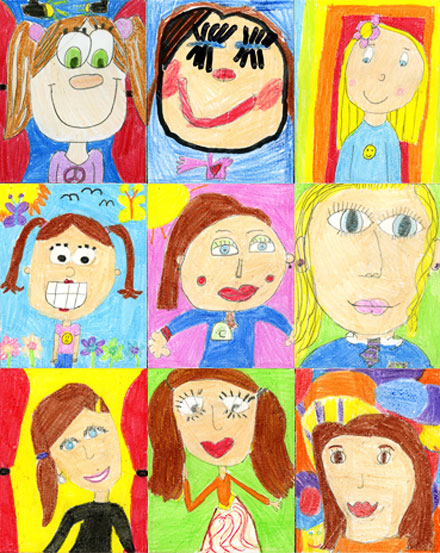
Creativity is the action of expressing so we feel no fear or judgement of others just like a child.

“I heard a great story recently of a little girl who was in a drawing lesson. She was six, and she was at the back, drawing, and the teacher said this girl hardly ever paid attention, and in this drawing lesson, she did. The teacher was fascinated. She went over to her, and she said, ‘What are you drawing?’ And the girl said, ‘I’m drawing a picture of God.’ And the teacher said, ‘But nobody knows what God looks like.’ And the girl said, “They will in a minute.’” (Robinson)

Bob McKim was a creativity researcher in the 1960’s and 1970’s along with teaching at Stanford University. One of the exercises that he would do with his students would be to have them very quickly draw their neighbor. Tim Brown experimented with this exercise during a lecture and found the same results that McKim stumbled upon; after the thirty seconds were up, the adults would go though a process where they would laugh, show embarrassment, and then say sorry.

If you try this same experiment with children, they have no embarrassment at all. They will show their masterpieces off to anyone who will look , but as they learn to become adults, they become more sensitive to the opinions of others and replace the freedom of creativity with embarrassment. (Brown)
McKim believed that the findings related to how the adult students would act showed that we fear the judgement of our peers. This fear is what causes us to be conservative in our thinking. In a talk about creativity with Elizabeth Gilbert, author of Eat, Pray, Love, she stated that “You cannot get rid of fear, but do remember that fear is boring.” (Gilbert)
Besides fear and embarrassment, why are we as adults stopping the creative process from happening?

I believe that we are stopping the creative process from happening because we have lost our imagination. “One of the things we tend to do as adults is we edit things. We stop ourselves from doing things. We self-edit as we are having ideas. In some cases, our desire to be original is actually a form of editing. That actually is not necessarily really playful. So that ability just to go for it and explore lots of things, even if they do not seem that different from each other, is actually something that children do well, and it is a form of play.” (Brown)

Sir Ken Robinson, an internationally recognized leader in the development of creativity, believes that it is the educational system that is hindering children’s creativity. Robinson states that, “Kids will take a chance. If they do not know, they will have a go. They are not frightened of being wrong. I do not mean to say that being wrong is the same thing as being creative. What we do know is, if you are not prepared to be wrong, you will never come up with anything original. By the time they get to be adults, most kids have lost that capacity. The result is that we are educating people out of their creative incapacitates.” 

Our education system is predicated on the idea of academic ability. Around the world, there were no public systems of education before the 19th century. They all came into being to meet the needs of industrialism in a two tiered academic hierarchy: the most useful subjects for work are at the top and academic ability. The consequence is that many highly-talented, creative people think they are intelligent, because the thing that they were good at at school was not valued, or was actually stigmatized.  Every education system on Earth has the same hierarchy of subjects. At the top are mathematics and languages, then the humanities, and at the bottom are the arts. (Robinson)

When we do this to children we are taking away imagination and replacing it with serious thoughts. Take a small child at Christmas into consideration. It is not uncommon for a small child to be more interested in the box that the toy came in than the actual toy itself. From an exploration perspective, this behavior makes complete sense because you can do quite a bit more with boxes than you can do with a toy. (Brown) Actually, the oldest, cheapest, and most diversely used toy is the stick. It can be anything from a magic wand to a sword. ("National Toy Hall of Fame: Stick.")

We need to harness this creativity that children have with a stick back into our daily adult lives, but the question is how do we do this? I have no definite answer for anyone. I know that currently as a current creative student, I live within the boundary lines of grades, and as a creative adult, I will live within the boundary lines of costs of my project ideas. Though my research of re-finding creativity, I found that there is not one path to relearning creativity. It is a personal believe that if we are to re-find our creative nature, we need to look into the eyes of a child and see how they are to handle a situation. Children are our keys to eliminating fear and embarrassment and relearning creativity.


Works Cited

Brown, Tim. “Tales of Creativity and Play.” TED. May 2008. Lecture

Gilbert, Elizabeth. "Fear Is Boring, and Other Tips for Living a Creative Life." Ideastedcom. TED Talks, 24 Sept. 2015. Web. 1 Nov. 2015.

"National Toy Hall of Fame: Stick." National Museum of Play. The Strong, 2008. Web. 1 Nov. 2015.


Robinson, Ken. “Do Schools Kill Creativity.” TED Febuary 2006. Lecture

Monday, October 26, 2015

What is Magic? - Magic is the act of willing a miracle through the power of believing.

What is Magic?
Magic is the act of willing a miracle through the power of believing.

When I was little I could levitate. No joke. I could float in air, as long as I was between two walls. I would start out between the two hallway walls and then jump to catch my legs and arms between the walls. Then I would climb until I could touch the ceiling with my little hands and close my eyes. I would hold myself there praying and talking to God saying, “I am ready. I will float today. I believe in You.” Slowly, I could not feel the wall anymore and I would casually start to levitate in the place that I had climbed to. I believed that God had not only given me the ability to be an abnormally flexible child, but the ability to float. Really, I was not committing an act of magic, but instead I was just climbing up the wall, holding myself there until my feet became numb, and praying to a man that I believed in, but I wholeheartedly believed that I was truly floating.

The reason I tell you this story is because magic will not happen unless you have something to believe in. “The question of whether people could actually achieve anything though magic is entirely different from the question of whether they thought they could.” (Malleus Maleficarum (The Hammer of the Witches)) I had such great faith in God that I believed He had given me a magical power that no one else possessed, therefore producing the miracle of a floating child. As I see it, magic is the act of willing a miracle through the power of believing.

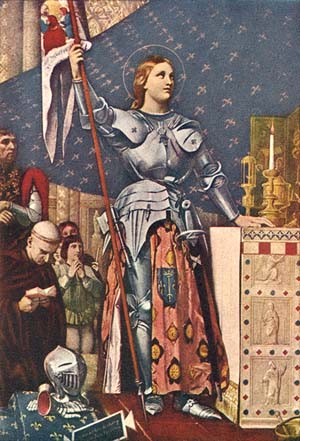
When people believe wholeheartedly that they are able to do something, they are able to accomplish anything they perceive. Joan of Arc was able to accomplish acts of magic with no real scientific reasoning behind their thoughts. Joan of Arc believed that she was talking to God to lead the French to victory. (Warner, Marina) This story is not much different than a young child believing they could levitate. Both Joan and the child believed that they had these unnatural powers that were willed to them by a higher power. Some may interpret the skills of understanding battle or floating as magic and others my interpret them as a miracle, but in both instances the willing belief in a higher being was present and strong.

Whether you believe in magic, miracles, a higher power, or not, "most philosophers regard belief in magic as a quaint superstition that has been replaced by some more rational understanding of cause and effect.” (Auxier) I believe that these philosophers regard this belief of magic because they need to have a reasoning behind every thought. Unlike myself, there are people out there that will need a reason for everything as they do not believe that there are some things that happen that do not need an explanation of why they happened. There are many instances that have no real explanation behind them for happening, yet they are widely known. These stories all have magic, will, miracles, and belief behind them.

An example of one of these stories would be out of the Book of John in the Bible. In this book, Jesus went to a party with his mother, Mary. Mary believed in the power which Jesus possessed and asked him if he would provide food and drink for the people attending as there was no food or drink left. Jesus willed his power, which could be substituted to thinking that his power was magic, to turn water into wine and produce more bread and fish. (Aitken) In this story, Jesus had many believers and used his will and magic to produce a miracle. None of this can be explained by science or by philosophy, yet it was an act that happened.

Magic, miracles, will and believe will keep surrounding us as humans, as will the obsession with explaining instances that do not have a rational answer. According to an article in Philosophy Now, “magic is going on all the time, usually unconsciously.” (Fuller) I believe that this unconscious act has to do with the power of will and magic.

“Page and Crowley… shared a fascination with ‘will’….as magic is an art of bringing the will to bear on what is.” (Auxier) Page and Crowley believed in anything that actually happened, yet they needed an explanation for everything. They believed in cause and effects due to their scientific background. Instead of believing in a higher being, Page and Crowley have similar thoughts to the ones expressed thus far, yet they believed in science as a God. They noticed that these magical actions were happening and, through determination, they found answers in their scientific knowledge much like how I find answers in my religious believes.

We all have that child inside of us that believed that anything could happen simply because it could. Grass could be blue and trains could fly. Nothing was logical, but everything made sense. We were never forced to rationalize how we felt as a child and everything we believed was true to our beliefs. Magic was all around us simply because we believed that miracles will happen.  Magic was, and still is all around us. It is the act of willing a miracle through the power of believing.


Works Cited

Aitken, Robert. The Holy Bible. American Bible Society ed. New York: Arno, 1968. Print.

Auxier, Randall. Magic Pages and Mythic Plants. Print.

Fuller, Mike. "The Logic of Magic." The Logic of Magic. Philosophy Now, 1 Oct. 2015. Web. 23 Oct. 2015.

Malleus Maleficarum (The Hammer of the Witches). 1486. Print.


Warner, Marina. The Trial of Joan of Arc. Evesham: Arthur James, 1996. Print. 

Sunday, October 4, 2015

Ethical Torture and God on Earth

He that smiteth a man, so that he die, shall be surely put to death…and if a man come presumptuously upon his neighbor, to slay him; thou shall be put to death …but if any harm follow, then thou shalt give life for life, eye for eye, tooth for tooth, hand for hand, foot for foot, burning for burning, wound for wound, stripe for stripe….
Exodus 21:12, 14, 23-25   ("Exodus 21, American Standard Version (ASV).")

Joan of Arc was burned at the stake on May 30, 1431. (Trial of Joan of Arc - Sections of Introduction) According to biblical teachings at the time, the people who burned her, should have been burned themselves, but they were not. This was because the people who had deemed her as dead did this because they believed that they were acting correctly in the eyes of the Lord. They were the ones who were sent to rid the world from the evil, but why was a nineteen year old who started hearing voices from God when she was thirteen tried for witchcraft and heresy? ("Joan of Arc.")

Joan of Arc believed that God had chosen her to lead France in the battles against the English. (Trial of Joan of Arc) As we know, she has not been one of the only people to believe that God has led them to do things or that they are a manifestation of God even in the dark ages. The Hermetic Order of the Golden Dawn claim to be a direct descent around 1614.  (The Golden Dawn - Introduction to the First Edition) Some better known “manifestations of God” include Charles Manson and David Koresh.

So how do we really know if someone has been set by God to carry out His word? Better off yet, how do we know the truth from a lie when interrogating someone? I truly believe that there is no correct or best practice to this answer, but currently the police use tactics like the Reid Technique which is better known as “good cop, bad cop”, informal questioning, or lying. (Mince-Didier, Ave)

Another way that is used around the world to get a confession is torture. “Governments around the world are two-faced on torture – prohibiting it in law, but facilitating it in practice” says Salil Shetty, Amnesty International’s Secretary General, speaking at the launch of their new ‘Stop Torture’ campaign. The Amnesty put out a survey to 144 different countries and found that “The vast majority of respondent (82%) believe there should be clear laws against torture, however more than a third (36%) still thought torture could be justified in certain circumstances.” ("World Without Torture.")  What does this say about our world? That torture is justified as long as the truth is known?
 
If this is the case, why do we just not administer a truth serum to every criminal put on trial? Yes these mind-altering drugs do actually exist and are not just a thing for the movies, but they are not as effective as they are in the movies. They do not completely inhibit the criminal’s ability to lie. They actually show the speed at which your body sends messages from your spinal cord to your brain which make it difficult to perform a high-functioning task like walking straight or lying. (Orwig, Jessica.) According to Washington Post reporter David Brown: "In the 21st century, however, the answer appears to be: No. There is no pharmaceutical compound today whose proven effect is the consistent or predictable enhancement of truth-telling." (Brown, David)
 
So with this being known, when is it ethical to use torture to get an answer from people? In a BBC report they describe a “ticking bomb problem”. In this scenario a terrorist group says they have concealed a nuclear bomb and the authorities have captured the leader of this group. The leader says that he knows where the bomb is but he will take the location of the bomb to his death. The situation has drastically increased and torture is guaranteed to produce the information needed to ensure the authorities find and disable the bomb. So would it be ethical to torture the group leader to find out where the bomb is and save thousands of lives or is it unethical to torture him and have thousands die as a result? “In this situation torturing the terrorist is unethical and can’t be justified, but I can be understood, and it can be forgiven and is seen as the right thing to do.” (BBC News)

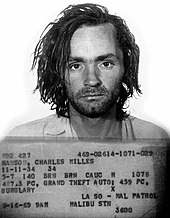
At the age of 77, Charles Manson was placed into solitary confinement. (Killoran, Ellen) In a United Nations report, solitary confinement is classified as “cruel, inhuman or degrading treatment or punishment and even torture” ("Special Rapporteur on Torture…) This is a man who brainwashed people into believing that he was God and lead these people to torture and kill others, yet there are people who believe that it in unethical to torture this man by putting him in a cell with his own thoughts so that, just like a small child being reprimanded, he will be able to sit there and think about what he had done.

Is torture ethical? Are these people reincarnations of God? Did Joan of Arc speak with God? I believe that we will never truly know the 100% right or wrong answer to this question and it is all up to interpretation per the situation.

Works Cited


BBC News. BBC, 2014. Web. 4 Oct. 2015.

Brown, David. "Some Believe 'Truth Serums' Will Come Back." Washington Post. The Washington Post, 20 Nov. 2006. Web. 5 Oct. 2015.

"Exodus 21, American Standard Version (ASV)." Exodus 21, American Standard Version (ASV). Web. 4 Oct. 2015.

"Joan of Arc." History.com. A&E Television Networks. Web. 4 Oct. 2015.

Killoran, Ellen. "Charles Manson Parole 2012: At 77, Notorious Criminal Still Has Family Of Supporters." International Business Times. IBT Media, 9 Apr. 2012. Web. 4 Oct. 2015.

Mince-Didier, Ave. "Tactics Police Use to Get a Confession | Criminal Law." CriminalDefenseLawyer.com. NOLO Local Defense Lawyers. Web. 4 Oct. 2015.

Orwig, Jessica. "The Real Truth Behind How 'Truth-Telling' Drugs Actually Work." Business Insider. Business Insider, Inc, 10 Oct. 2014. Web. 4 Oct. 2015.

"Special Rapporteur on Torture Tells Third Committee Use of Prolonged Solitary Confinement on Rise, Calls for Global Ban on Practice | Meetings Coverage and Press Releases." UN News Center. UN, 18 Oct. 2011. Web. 4 Oct. 2015.

The Golden Dawn - Introduction to the First Edition. 14-18, 45-48. Print.

Trial of Joan of Arc - Sections of Introduction. 1-3, 26-32. Print.

"World Without Torture." World Without Torture. RSS, 13 May 2014. Web. 4 Oct. 2015.


Sunday, September 20, 2015

Questioning: God, Children, and the Golden Rule

Questioning: God, Children, and the Golden Rule

 “In the beginning God created the heaven and the earth. And the earth was without form, and void; and darkness was upon the face of the deep. And God said, Let there be light; and there was light.  And the rib, which the Lord God had taken from man, made he a woman, and brought her unto the man. And they were both naked, the man and his wife, and were not ashamed. But the fruit of the tree which is in the midst of the garden, God said, You shall not eat from it, neither shall you touch it or you die…but she took the fruit, and did eat, and gave her husband the fruit too; and he did eat…So God drove out the man and woman.”

-  The Holy Bible, King James Version Genesis 1:1-3, Genesis 2:22-25, Genesis 3:3, 3:6, 3:24


“In the beginning, which occurred near the start, there was nothing but God, darkness, and some gas. The Bible says, ‘The Lord thy God is one,’ but I think He must be a lot older than that. Anyway, God said, ‘Give me a light!’ and someone did. Then God made the world.
 He split the Adam and made Eve. Adam and Eve were naked, but they weren't embarrassed because mirrors hadn't been invented yet. Adam and Eve disobeyed God by eating one bad apple, so they were driven from the Garden of Eden..... Not sure what they were driven in though, because they didn't have cars…” ("The Children's Bible in a Nutshell.")

-          Excerpt from a little boy’s Sunday School Bible Verbal Book Report


Never was I a child who went to Sunday school on a regular basis. Instead, I was taught about God by my mother at home. She would read us the famous stories of the Bible until my brother and I had the stories memorized. Like the little boy who told us about the beginning of the Bible, as a child I could not completely comprehend what the Bible meant and what it was telling me, instead I only knew how I understood the stories.

Growing up as a religious person in a religious family, I never understood how there could be people in this world who did not believe in the word of God. To me, God’s word is law and it’s the reality of everything. People would say things to me like “Well what if parts of the Bible are just big exaggerations?” They had a point. None of the stories from the Bible were exactly the same. John describes the beginning of the world a little different than the Book of Genius. This made me question if my reality of the Bible being the Word was just some childish point of view. My reality was then being put into question by how well humans in the past had explained significant events.

“Well if we are on a predetermined path, then why does it matter what we do? We aren’t choosing what we are doing then.” The naysayers of my belief would ask me this question too, and I guess they had a merit of truth to that statement as well. Is freewill really free if we are on a predetermined path? In my own twisted, religious way I would argue yes. Yes, we did have freewill because we were allowed to  sin and that was alright because it would just bring us back to needing God, which is what He wants. How we get to God is all up to us and how we use our freewill on our predetermined path to get to Him.

The main question I am asked when it comes to God is “How do you know that God is real?” Philosopher William James would tell me according to his idea of radical empiricism, only things that you experience can be debated and argue with me that because I cannot see God and I cannot touch him, that he is not real. (Pigliucci, Massimo) But I know that my God is real and He is not the only thing that we believe in that we cannot explain.

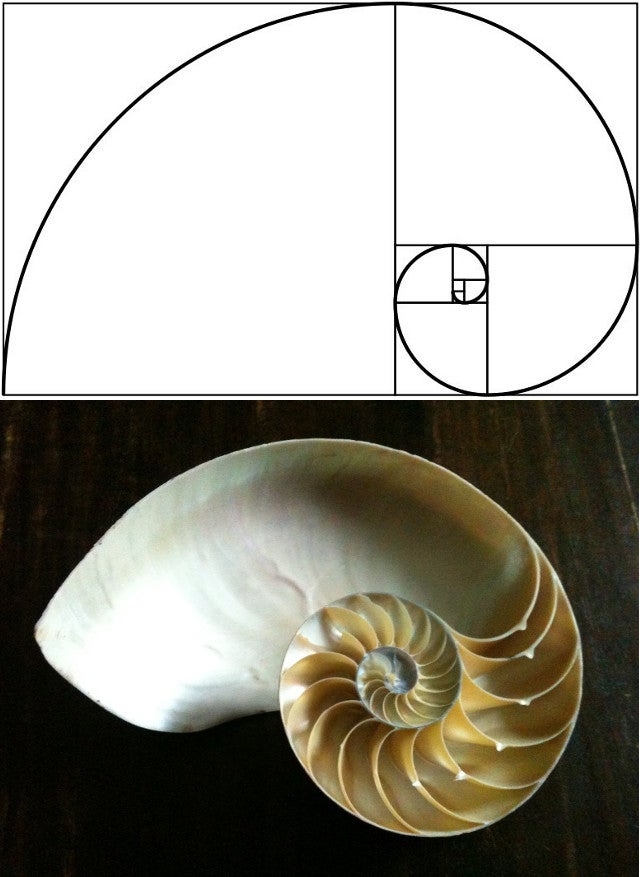
In religion we have something known as the Golden Rule. This rule simply states that we are to treat other people as we wish to be treated. ("Versions of the Golden Rule in 21 World Religions.") Nature has its own golden rule too called the Golden Ratio.

The golden ratio is a proven mathematical number. Since it can be proven, William James should believe, but he still would not. According to a professor of mathematics at Stanford University, Keith Devlin, “we’re creatures who are genetically programmed to see patterns and to seek meaning...”, but even though the Golden ratio has the hard fact of a mathematical formula behind it, we still cannot explain why we find the looks of these art and architecture works more beautiful than works that do not use the Golden Ratio. ("The Golden Ratio: Design's Biggest Myth.")

15 Uncanny Examples of the Golden Ratio in NatureThe Golden Ratio is used in seashells, leaves, flowers, and tree branches and proves that there is order in nature that is unexplainable. (Dvorsky, George.) Mathematics can be defined as an interpretation of patterns and patterns are rational. Therefore when wondering if there is a rational explanation behind nature, yes, there is. The Golden Ratio proves it mathematically and God provides it for eternity.

Now as an adult, I understand what the Bible was trying to tell me. It was telling me that through the stories of other people we have been put on a path of greatness though Him.
God is the man upstairs that created the unexplainable order of nature and allowed us to still have freewill on our predetermined path. God and the Bible also lead me to believe that it is alright to have wonder and thoughts, but it is also alright for there to be unexplainable aspects of life.


 Works Cited

Dvorsky, George. "15 Uncanny Examples of the Golden Ratio in Nature." 2 Feb. 2013. Web. 20 Sept. 2015.

Pigliucci, Massimo. "The Return of Radical Empiricism." Scientia Salon. Wordpress, 28 Aug. 2014. Web. 20 Sept. 2015.

"The Children's Bible in a Nutshell." Funny Bible Interpretation by a Child. From Fatigued To Fantastic, LLC, 2012. Web. 20 Sept. 2015.

"The Golden Ratio: Design's Biggest Myth." Co.Design. 13 Apr. 2015. Web. 20 Sept. 2015.

The Holy Bible. King James Version ed. New York: Arno, 1968. Print.

"Versions of the Golden Rule in 21 World Religions." Versions of the Golden Rule in 21 World Religions. Scarboro Missions, 2002. Web. 21 Sept. 2015.